The Bharatiya Janata Party (BJP) on Tuesday moved swiftly to initiate government formation in West Bengal and Assam, appointing senior leaders to oversee the selection of legislative party heads in both states. The announcement follows the party’s historic electoral triumph that has redrawn the political map in eastern India.
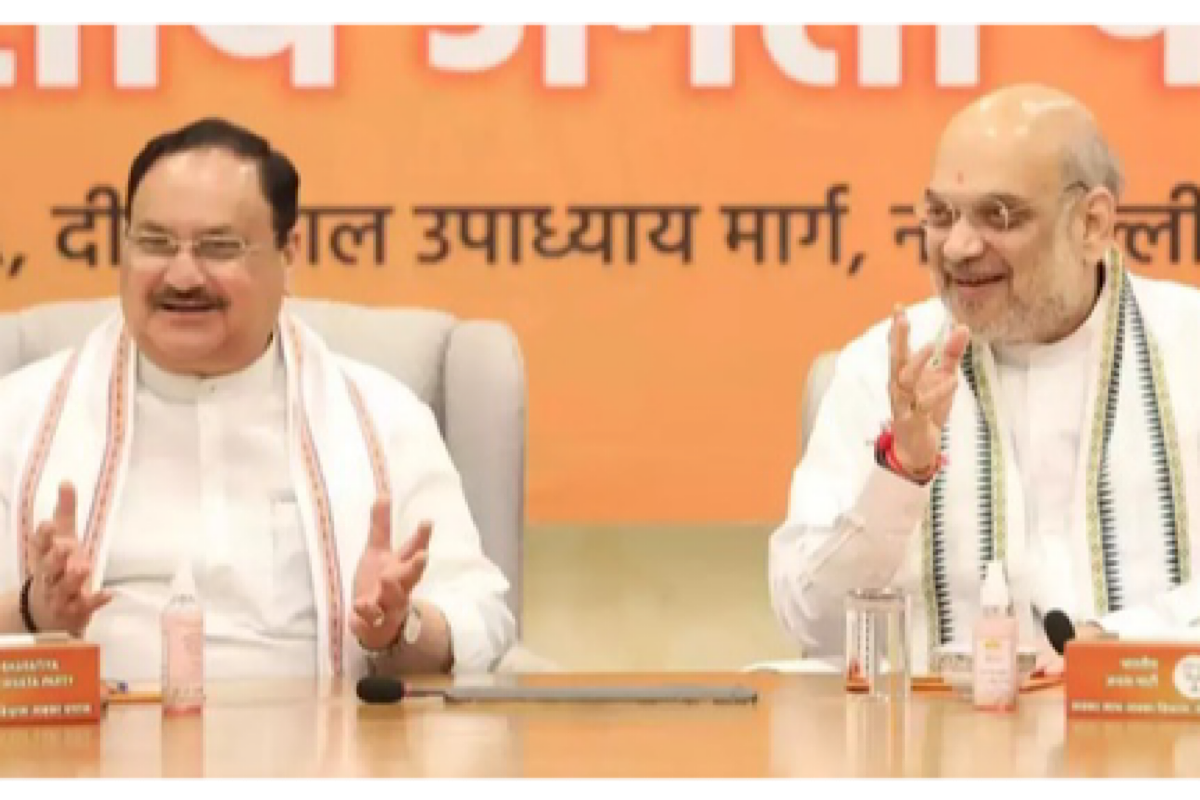
Union Home Minister Amit Shah has been named the BJP’s central observer for West Bengal, with Odisha Chief Minister Mohan Charan Majhi designated as co-observer. In Assam, Union Minister JP Nadda will serve as central observer, assisted by Haryana Chief Minister Nayab Singh Saini.
Advertisement
The appointments come a day after the BJP registered a landmark victory in the Assembly elections. In West Bengal, the party is set to form its first-ever government, securing a decisive mandate. According to the Election Commission of India, the BJP won 207 seats in the 294-member Assembly, while the Trinamool Congress (TMC) finished with 80 seats.
In Assam, the BJP-led National Democratic Alliance (NDA) retained power for a third consecutive term, comfortably crossing the majority mark. The BJP secured 82 seats in the 126-member Assembly, well above the halfway mark of 64. Its allies, the Asom Gana Parishad (AGP) and the Bodoland People’s Front (BPF), won 10 seats each, consolidating the alliance’s position. The Congress, despite contesting in alliance with several parties, managed just 19 seats.